Categorias
Novos produtos
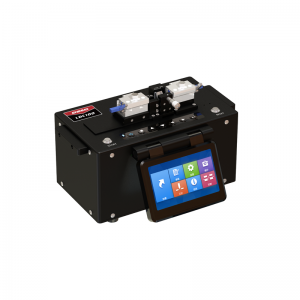
Cortadora de fibra óptica de gran diámetro LDC-100 * Aplicable a fibras de 80 μm ~ 600 μm de diámetro de revestimiento *Bomba de vacío ranura en V conveniente para poner fibra *Cuchilla duradera, vida útil más de 20000 veces *Almacenamiento de datos 4000 grupos * Menú GUI fácil de usar, fácil de operar Mais
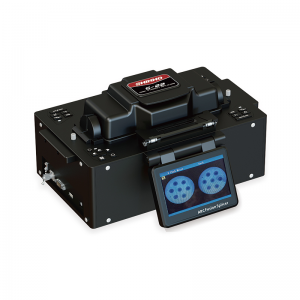
S-22 Multi-Core Fiber Fusion Splicer O 1º S plicer de F usion F usion de Múltiplos Núcleos Totalmente Automático na China Mais
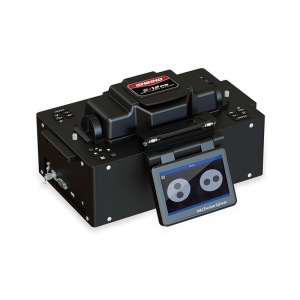
Polarização Manutenção (PM) de Fibra de Fusão, Junção de S-12 * Núcleo para núcleo de alinhamento, baixa perda de emenda * Endview e Perfil de observação e de alinhamento * Arco de calibração automática e emendas PM * fibra de 45 e 90 graus de alinhamento Mais
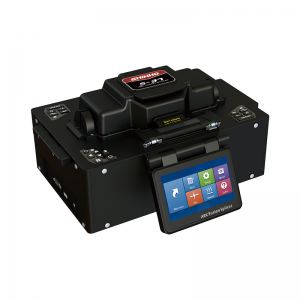
S-37 LDF Specialty Fiber Fusion Splicer SHINHO S-37 é o modelo mais recente que desenvolvemos, pode emendar o diâmetro do revestimento de fibra de 125 a 400μm com baixa perda de emenda. Equipamos a máquina com 3 suportes de fibra diferentes e 2 pares de eletrodos sobressalentes. Mais
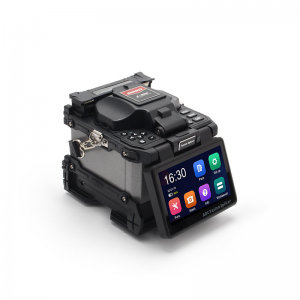
núcleo para core splicer de fusão de fibra de alinhamento x 900 splicer de fusão de seis motores, núcleo real para a tecnologia de alinhamento de núcleo. 6s splicing, 16s heating, identificam os tipos de fibra automaticamente. usado para projetos de wan / man / telecomunicação. Mais
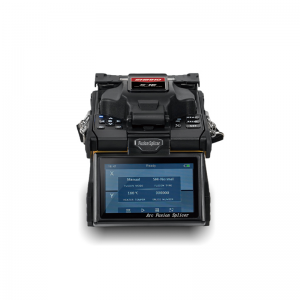
splicer robusto multi-função da fusão do arco s16 design industrial robusto, anti-choque, à prova de poeira e à prova d'água. suporte multifuncional para fibra nua, patch cords, cabo drop etc. emenda rápida e aquecimento, calibração automática de arco. Mais
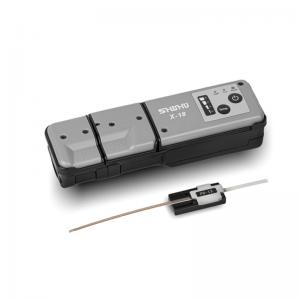
Pelacables térmico de fibra de cinta SHINHO X-18 El pelacables térmico Shinho X-18 es un pelacables térmico manual recientemente desarrollado, especialmente diseñado para el pelado térmico no destructivo de la cubierta del cable plano de hasta 12 fibras. Una herramienta buena y confiable para trabajos de empalme de fibra de cinta. Mais
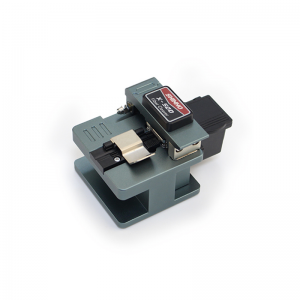
Cuchilla de fibra óptica de alta precisión X-50D Tamaño pequeño y peso ligero, fácil de operar. Alta precisión y rendimiento estable. Más de 48000 tiempos de vida útil de la hoja, longitud de fibra cortada de 5 a 20 mm. material de alta calidad Mais
Multi-Core Fiber and the Future of High-Capacity Connectivity
The rapid development of artificial intelligence is transforming the optical communication industry. As AI models become larger and computing clusters expand, data centers require higher bandwidth, lower latency, and more efficient data transmission. Optical connectivity is therefore becoming increasingly important, not only for telecommunications networks but also for connections within and between AI data centers.
Traditional optical fibers generally transmit signals through a single core. Multi-core fiber integrates multiple independent cores within one fiber, offering a potential way to significantly increase transmission capacity without proportionally increasing cable size.
The release of a new international standard for weakly coupled single-mode multi-core fiber in October 2026 represents an important step toward wider industrial adoption. Standardization can help improve compatibility, establish common technical requirements, and facilitate cooperation across the industry. However, large-scale deployment will still depend on engineering validation, cost efficiency, and practical application requirements.
As computing power becomes more distributed, optical networks must support increasingly complex connections between servers, computing clusters, and data centers. This is accelerating interest in high-density optical cabling, advanced fiber technologies, and more efficient network architectures.
Alongside multi-core fiber, technologies such as hollow-core fiber and optical-electrical integration are attracting attention as the industry explores new ways to improve transmission performance and network efficiency.
The industry is moving beyond technological breakthroughs toward practical deployment. Common standards, reliable manufacturing processes, compatible equipment, and effective testing methods will all be important to bringing emerging fiber technologies into commercial use.
As AI infrastructure continues to develop, the optical communication industry is likely to see growing demand for higher-capacity connectivity, advanced optical components, and specialized fiber-processing technologies.
The optical communication industry is entering a new phase of development, driven increasingly by AI computing and data center infrastructure. Multi-core fiber illustrates how the industry is exploring new approaches to expanding transmission capacity, while standardization is helping lay the groundwork for future commercialization. As these trends evolve, technological innovation, system compatibility, and deployment efficiency will remain central to the industry's long-term growth.

Seja bem-vindo a registrar o boletim informativo, se você tiver algum interesse em nossos produtos, vamos mantê-lo informado de nossas notícias, informações sobre produtos e promoções, se houver algum.
© Copyright: SHINHO OPTICS LIMITED Todos os direitos reservados.


 português
 English
 français
 русский
 italiano
 español
 العربية
 ไทย
 हिन्दी
 Indonesia
 中文