Categorias
Novos produtos
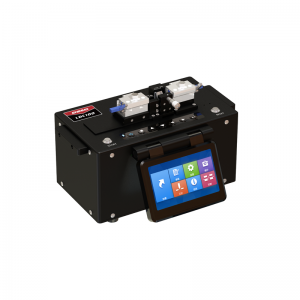
Cortadora de fibra óptica de gran diámetro LDC-100 * Aplicable a fibras de 80 μm ~ 600 μm de diámetro de revestimiento *Bomba de vacío ranura en V conveniente para poner fibra *Cuchilla duradera, vida útil más de 20000 veces *Almacenamiento de datos 4000 grupos * Menú GUI fácil de usar, fácil de operar Mais
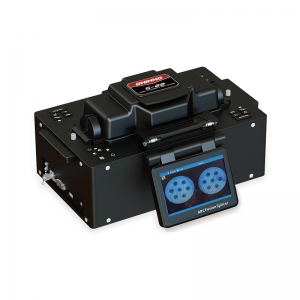
S-22 Multi-Core Fiber Fusion Splicer O 1º S plicer de F usion F usion de Múltiplos Núcleos Totalmente Automático na China Mais
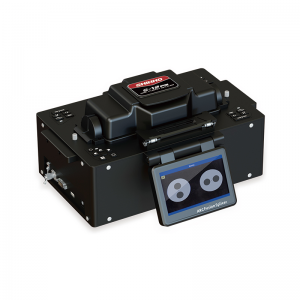
Polarização Manutenção (PM) de Fibra de Fusão, Junção de S-12 * Núcleo para núcleo de alinhamento, baixa perda de emenda * Endview e Perfil de observação e de alinhamento * Arco de calibração automática e emendas PM * fibra de 45 e 90 graus de alinhamento Mais
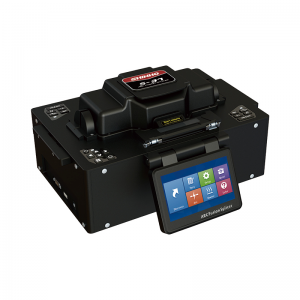
S-37 LDF Specialty Fiber Fusion Splicer SHINHO S-37 é o modelo mais recente que desenvolvemos, pode emendar o diâmetro do revestimento de fibra de 125 a 400μm com baixa perda de emenda. Equipamos a máquina com 3 suportes de fibra diferentes e 2 pares de eletrodos sobressalentes. Mais
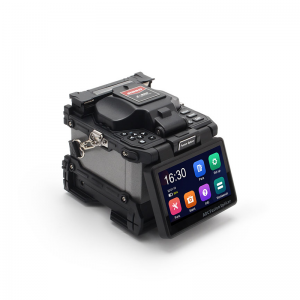
núcleo para core splicer de fusão de fibra de alinhamento x 900 splicer de fusão de seis motores, núcleo real para a tecnologia de alinhamento de núcleo. 6s splicing, 16s heating, identificam os tipos de fibra automaticamente. usado para projetos de wan / man / telecomunicação. Mais
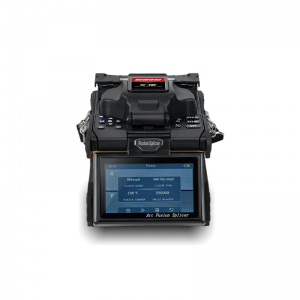
splicer robusto multi-função da fusão do arco s16 design industrial robusto, anti-choque, à prova de poeira e à prova d'água. suporte multifuncional para fibra nua, patch cords, cabo drop etc. emenda rápida e aquecimento, calibração automática de arco. Mais
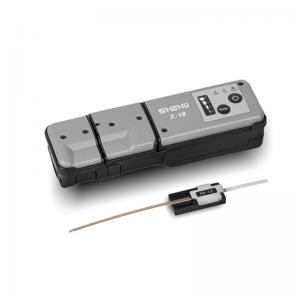
Pelacables térmico de fibra de cinta SHINHO X-18 El pelacables térmico Shinho X-18 es un pelacables térmico manual recientemente desarrollado, especialmente diseñado para el pelado térmico no destructivo de la cubierta del cable plano de hasta 12 fibras. Una herramienta buena y confiable para trabajos de empalme de fibra de cinta. Mais
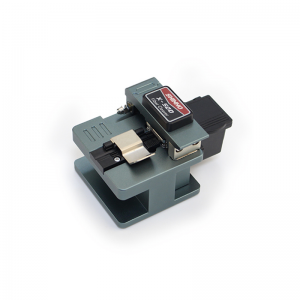
Cuchilla de fibra óptica de alta precisión X-50D Tamaño pequeño y peso ligero, fácil de operar. Alta precisión y rendimiento estable. Más de 48000 tiempos de vida útil de la hoja, longitud de fibra cortada de 5 a 20 mm. material de alta calidad Mais
Why Ribbon Fiber Is Taking Over Telecom & Data Center Deployments?
As hyperscale data centers, 5G transport networks and metro telecom backbones keep scaling bandwidth, ribbon fiber has evolved from a niche option into the dominant cabling choice for high-fiber-count projects. More installers now deploy both 200μm and traditional 250μm coated ribbon fibers side by side, and dedicated ribbon fusion splicers have become mandatory field equipment for these builds. Among available solutions, China’s Shinho X-950 ribbon splicer has earned a strong reputation as a top-tier workhorse for modern ribbon splicing jobs.
Ribbon fiber arranges multiple optical fibers (typically 4, 8, 12 or 16 fibers) neatly side-by-side in a flat, color-coded ribbon matrix. Unlike loose-tube single fiber cables that require splicing fiber by fiber one at a time, ribbon enables mass fusion splicing: you splice an entire ribbon of fibers in one single cycle. This cuts field splicing time drastically and slashes labor cost, which is the biggest pain point for large backbone deployments.
For telecom metro networks and data center interconnections, the two core drivers are higher fiber density and faster deployment. Data centers are racing to support 400G, 800G and upcoming 1.6T parallel optics, which demand massive parallel fiber lanes. Meanwhile, urban telecom ducts are already overcrowded; digging new ducts is extremely expensive and slow. Ribbon cable packs far more fibers into the same conduit or cable tray space compared with conventional loose-tube cables, saving valuable real estate inside data center racks and underground duct routes.
Ribbon fiber also simplifies MPO/MTP trunk integration, the standard connector system for parallel optical links in data centers. With pre-colored ribbon fibers, technicians can trace fiber mapping quickly, reduce termination errors and improve troubleshooting speed during cutover or maintenance.
The main difference lies in the outer coating diameter, while the glass cladding remains the standard 125μm for both variants.
250μm coated ribbon fiber is the long-established industry standard. It has a thicker protective coating, stronger mechanical resistance, better bending tolerance and higher robustness during stripping, handling and pulling. It is widely adopted for outside plant telecom, long-haul metro backbones and general-purpose indoor trunks, where installers want forgiving, field-tough fiber.
200μm reduced-coating ribbon fiber is the newer high-density solution. Its thinner coating reduces overall fiber size and delivers up to 40% higher fiber packing density. In the same cable outer diameter, a 200μm ribbon cable can carry significantly more fibers. This is a game-changer for congested microducts, hyperscale data center inner cabling and ultra-high-fiber-count cables (864f, 1728f or even higher). The tradeoff is slightly higher microbending sensitivity, so handling and stripping must be more careful.
In real-world projects, system designers mix both: 200μm ribbon for dense indoor data center trunks and limited duct space, while retaining 250μm ribbon for outside plant and routes that require rugged mechanical performance. This hybrid design maximizes space savings without sacrificing reliability in harsh field environments.
Mass ribbon splicing cannot be done with ordinary single-fiber splicers. You need a dedicated ribbon fusion splicer equipped with precision V-grooves, multi-fiber alignment optics and matched thermal stripping accessories to line up all fibers in the ribbon simultaneously, perform arc fusion and heat shrink the protective sleeves in one batch.
Many professional brands offer ribbon splicers, but contractors balance three key criteria: stable low splice loss, fast splicing/heating cycle, rugged field build, and compatibility with both 200μm and 250μm ribbon fibers.
Shinho X-950 from China’s Shinho Optics stands out as one of the best choices for global field teams. The X-950 supports mass splicing for 2 to 12-core ribbon fibers, compatible with both 200μm and 250μm ribbon, covering SM, MM, NZDS and DS fiber types. It delivers ultra-low average splice loss, with a standard splicing cycle of only 20 seconds. Heating takes roughly 26 seconds for 1–2 fibers and 40 seconds for full 4–12 fiber ribbons.
Built for field work, the X-950 has IP52 dust/water/shock resistance, a detachable rechargeable lithium battery, intuitive touchscreen UI, automatic arc calibration, and built-in storage for thousands of splice records and images. It ships with a matched X-18 ribbon thermal stripper, so the whole ribbon prep + splicing workflow is streamlined. CE, RoHS and ISO certifications make it acceptable for telecom and data center projects across global markets.
Many field technicians regard the Shinho X-950 as China’s premium ribbon splicer, offering performance comparable to top international brands at a more practical total cost of ownership, with accessible aftersales and spare parts support.

Seja bem-vindo a registrar o boletim informativo, se você tiver algum interesse em nossos produtos, vamos mantê-lo informado de nossas notícias, informações sobre produtos e promoções, se houver algum.
© Copyright: SHINHO OPTICS LIMITED Todos os direitos reservados.


 português
 English
 français
 русский
 italiano
 español
 العربية
 ไทย
ไทย हिन्दी
 Indonesia
 中文
中文